
How to Choose the Right Storage Unit Size in Riyadh: 2026 Sizing Guide
Choosing the right storage unit size is the single decision that shapes your entire storage experience. Pick too small and your goods get crushed and disorganized. Pick too large and you waste money every month on empty air. In Riyadh’s fast-growing market, getting the size right in 2026 means smarter budgets and safer stock.
This practical guide breaks down unit sizes, what each one holds, and how temperature category affects your choice. By the end, you will know exactly how much space you need, whether you are storing furniture, business stock, or frozen goods.
Why Storage Unit Size Is the First Thing to Get Right
Storage pricing is driven mostly by volume. Every extra square meter adds to your monthly bill, so accuracy pays off. At the same time, cramming items into a tight unit invites damage, blocks access, and makes retrieval a nightmare.
The goal is a comfortable fit: enough room to stack safely, walk between items, and pull out what you need without unloading everything. A well-sized unit protects both your possessions and your wallet.
- Under-sizing risk: Damaged goods, poor access, forced upgrades later.
- Over-sizing risk: Paying for space you never use.
- Right-sizing reward: Organized, accessible, cost-efficient storage.
Storage Unit Sizes and What They Actually Hold
Sizes vary by provider, but the table below gives a reliable reference for planning in Riyadh. Match your inventory to the closest category, then round up slightly if you expect to add items.
| Unit Size | Approx. Volume | Holds Roughly | Best For |
|---|---|---|---|
| Small (1–3 m²) | Locker to closet | Boxes, documents, small appliances | Decluttering, archives |
| Medium (4–7 m²) | One-bedroom home | Furniture, appliances, 20–30 boxes | Apartment moves |
| Large (8–15 m²) | Two to three-bedroom home | Full household or business stock | Family relocations, SMEs |
| Extra Large (16 m²+) | Large home or warehouse zone | Bulk inventory, pallets, machinery | Commercial operations |
How Temperature Category Changes Your Size Calculation
Size is not only about floor area. The temperature environment you choose affects both the products you can store and how you should pack them. Frozen and dry goods, for example, follow very different rules.
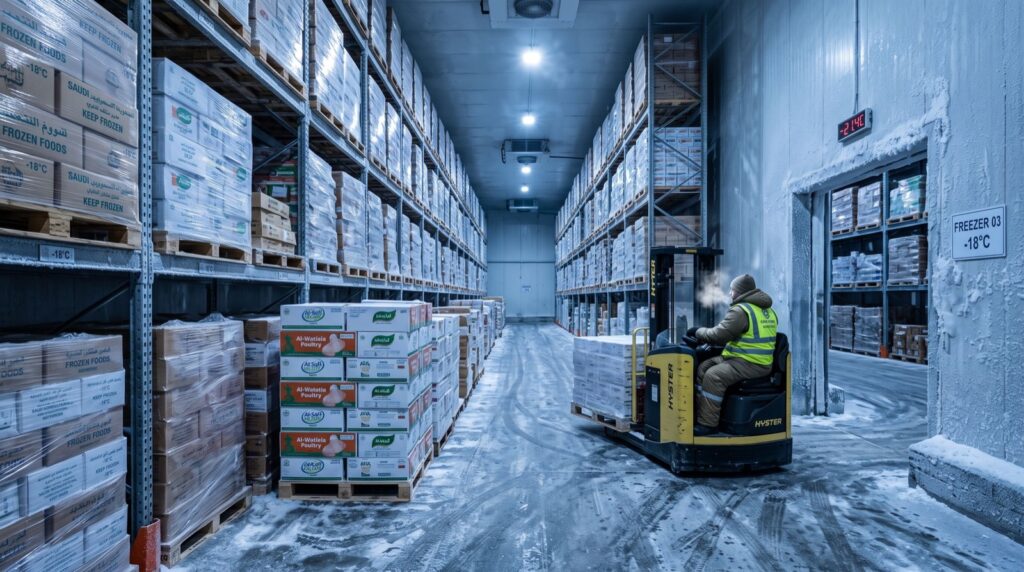
For pallets, cartons, and packaged goods that only need protection from heat and dust, a dependable Dry Storage in Riyadh facility lets you stack efficiently and maximize every square meter. For meat, seafood, and frozen meals, a purpose-built Frozen Storage in Riyadh unit maintains sub-zero temperatures while still allowing organized, accessible layout.
Does frozen storage need more space than dry storage?
Often, yes. Frozen units require airflow around products to maintain even temperatures, so you cannot pack them as tightly as dry goods. Plan for slightly more volume when storing frozen inventory, and never block ventilation channels with over-stacked boxes.
A Simple Method to Calculate Your Storage Needs
You do not need special software to size a unit accurately. Follow this straightforward process and you will land on the right choice.
- List everything. Write down each major item or stock type you plan to store.
- Estimate volume. Measure large items and count your boxes.
- Add a buffer. Include 10 to 20 percent extra for walking space and future additions.
- Split by temperature. Separate frozen, chilled, and dry items into their own zones.
- Confirm access needs. Leave aisles if you retrieve items frequently.
- Match to a unit. Choose the size that fits comfortably, not tightly.
When you compare facilities, look beyond price alone. Clear terms, honest sizing advice, and responsive support matter enormously, so choose trusted professionals who help you avoid paying for space you do not need.
What if I underestimate and run out of room?
Flexible providers make upsizing easy. Many let you move to a larger unit or add a second one mid-contract. Still, a careful estimate up front saves you the hassle of repacking and relocating stock later.
Packing Smart to Use Every Square Meter
Good packing can shrink the size you need by a full category. Uniform boxes stack better, and vertical storage uses the full height of your unit. Disassemble large furniture and store shelving units flat against walls.
For guidance on safe handling and stacking practices, the Occupational Safety and Health Administration publishes widely referenced warehousing safety standards that apply to any organized storage setup, including height limits and load stability.
- Use same-size boxes for stable stacking.
- Store heavy items on the bottom, light items on top.
- Label every box on multiple sides for quick identification.
- Leave a central aisle in larger units for access.
Common Sizing Mistakes to Avoid in 2026
Even experienced businesses slip up when estimating storage size. Learning from these frequent errors keeps your budget lean and your goods protected throughout the year.
The most common mistake is forgetting about access space. People measure their items precisely, then discover they cannot reach the boxes at the back without unloading everything. Another frequent error is ignoring seasonal growth, which forces an expensive mid-year relocation to a larger unit.
- Measuring items only: Always add aisle and buffer space to your total.
- Ignoring vertical space: Tall units let you stack upward and save floor area.
- Underestimating turnover: Fast-moving stock needs more accessible layout.
- Skipping the buffer: A tight fit today becomes a problem tomorrow.
Taking thirty extra minutes to plan carefully in Riyadh pays back many times over. A right-sized unit stays organized, keeps costs predictable, and grows with your business rather than holding it back. Treat sizing as a strategic decision, not an afterthought, and your storage will serve you reliably all year long.
Frequently Asked Questions
How do I know what storage unit size I need?
List your items, estimate their combined volume, and add a 10 to 20 percent buffer for access and growth. Match that total to the closest unit size, rounding up if you expect to add more.
Can I change my unit size after signing up?
Yes. Most Riyadh providers allow upsizing or downsizing during your contract. Ask about flexibility before you commit so you can adjust as your needs shift.
Is a bigger unit always safer for my goods?
Not necessarily. Excess empty space wastes money, while a right-sized unit keeps items stable and organized. Aim for a comfortable fit rather than the largest option available.
Do frozen and dry goods need separate units?
Yes. Frozen items require sub-zero temperatures and airflow, while dry goods only need protection from heat and moisture. Store them in dedicated units suited to each condition.
Conclusion: Get the Size Right, Save All Year
Choosing the right storage unit size in Riyadh is about balance: enough room to store safely, without paying for empty space. Measure your items, add a sensible buffer, split by temperature category, and pack smart to maximize every meter.
Ready to store with confidence in 2026? Compare dry and frozen storage options in Riyadh, get expert sizing advice, and request a quote today to lock in the perfect fit for your goods.